
Trump to Deliver National Address Tomorrow at 9 PM ET on Iran
White House Announces Major Update as Conflict Enters Critical Phase
By Candid Brief News | CandidBrief.com | March 31, 2026
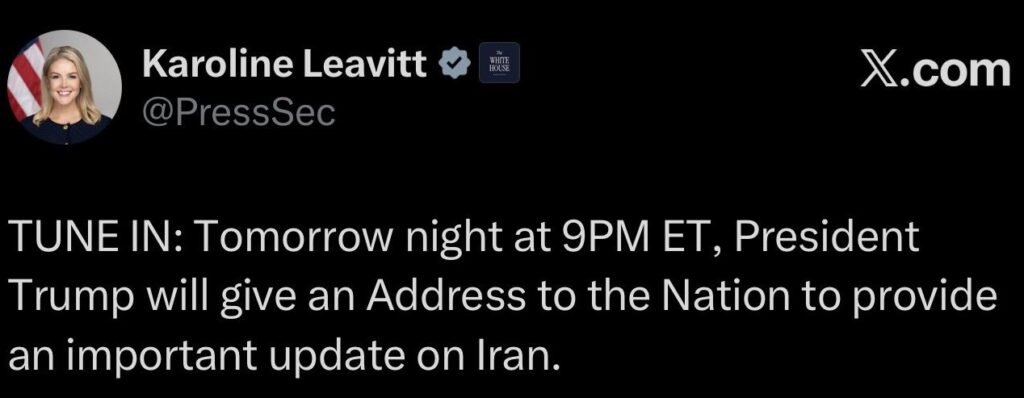
President Donald J. Trump will address the American people tomorrow evening, April 1, 2026, at 9:00 p.m. Eastern Time, to provide what the White House is calling an “important update on Iran.” The announcement comes amid ongoing U.S. military operations, diplomatic maneuvering, and severe disruptions in global energy markets tied to the conflict.
Background
The U.S.-led campaign against Iran, which began with joint strikes in late February 2026, has now stretched into its fifth week. While initial objectives focused on neutralizing nuclear and military threats, the conflict has escalated into a broader standoff over key maritime routes. U.S. troop levels in the Middle East have surpassed 50,000, and the economic ripple effects—particularly soaring jet fuel and oil prices—have already forced major airlines to cancel flights and adjust schedules.
White House Press Secretary Karoline Leavitt confirmed the upcoming address via social media, describing it as a timely national briefing on the latest developments.
What the Speech Could Cover
Given Trump’s recent public comments, the address is widely expected to touch on several key areas:
- Progress Toward Ending U.S. Involvement: Trump has privately and publicly expressed frustration with the prolonged engagement and signaled that American combat operations could wind down within the next two to three weeks. He has indicated the U.S. has largely achieved its core military goals and may shift remaining responsibilities to allies or regional partners.
- Diplomatic and Negotiation Updates: Recent reports highlight back-channel talks, including a reported 15-point U.S. proposal to Iran and limited goodwill gestures from Tehran (such as allowing a small number of oil tankers to transit the Strait of Hormuz). The speech may detail any breakthroughs or remaining sticking points.
- Iran’s Military Posture and U.S. Red Lines: Trump has repeatedly warned of further strikes—including potential targeting of Iranian power plants, oil infrastructure, or desalination facilities, if Tehran does not comply with demands. He may reiterate these threats or outline de-escalation conditions.
Focus on the Strait of Hormuz: Current Situation and Potential Solutions
A central element of the ongoing crisis, and likely a major topic in tomorrow’s address, is the Strait of Hormuz, the narrow waterway through which roughly 20% of global oil and significant liquefied natural gas shipments normally pass. Iran has effectively restricted or blocked most commercial traffic since the conflict began, triggering sharp spikes in energy prices and contributing directly to the jet-fuel shortages now affecting airlines worldwide.
Strait of Hormuz at a Glance (as of March 31, 2026)
| Aspect | Current Status | Potential Solutions Under Discussion |
|---|---|---|
| Traffic Flow | Reduced to a trickle; limited tanker passages allowed as “goodwill” | Diplomatic deal for full reopening; limited escorted convoys |
| Economic Impact | Oil prices elevated; jet fuel shortages prompting flight cuts | International naval coalition to secure route |
| U.S. Stance | Trump open to ending operations without immediate full reopening | Shift policing to allies; “Strait of Trump” rhetoric |
| Iranian Position | Blocks “aggressor” vessels; threatens retaliation | Ceasefire tied to sanctions relief or security guarantees |
| Timeline Outlook | Full normalization possibly 6–8 weeks away | U.S. exit in 2–3 weeks, leaving security to others |
Analysts note that Trump has floated the idea of other nations (including European and Asian allies) assuming responsibility for securing the strait, famously referring to it in jest as the “Strait of Trump.” He has also suggested the waterway could “automatically open” once U.S. forces reduce their footprint, while maintaining pressure through targeted threats.
Why This Matters
Tomorrow’s address comes at a pivotal moment when markets are bracing for further volatility. Any signal of de-escalation could ease energy prices, while continued tough rhetoric might sustain upward pressure on oil and fuel costs. For American travelers and businesses already feeling the pinch from airline schedule cuts, the speech could provide much-needed clarity on when relief might arrive.
The coming days remain fluid, with the 9 PM address expected to shape both domestic expectations and international responses.
Sources (as of March 31, 2026):
- The New York Times live updates, Reuters, Bloomberg, CNBC, BBC, CBS News
- White House statements via Press Secretary Karoline Leavitt
- President Trump’s recent remarks and Truth Social posts
- Industry analysis from Macquarie Group, IEA, and energy market reports
Disclaimer: This article is a curated news roundup and analysis based on publicly available reporting from multiple established sources. Candid Brief News does not have independent on-the-ground reporting and encourages readers to cross-reference primary outlets.