
Trump Threatens Strikes on Iranian Power Plants and Bridges as Naval Blockade Takes Hold
By Candid Brief News | CandidBrief.com | April 16, 2026
President Donald J. Trump posted on Truth Social this morning issuing fresh warnings to Iran, stating that U.S. forces are prepared to strike power plants and bridges if Tehran does not fully comply with demands to keep the Strait of Hormuz open. The statement comes as the U.S. naval blockade of the strait is actively being enforced and multiple international tankers are already enroute to load American crude.
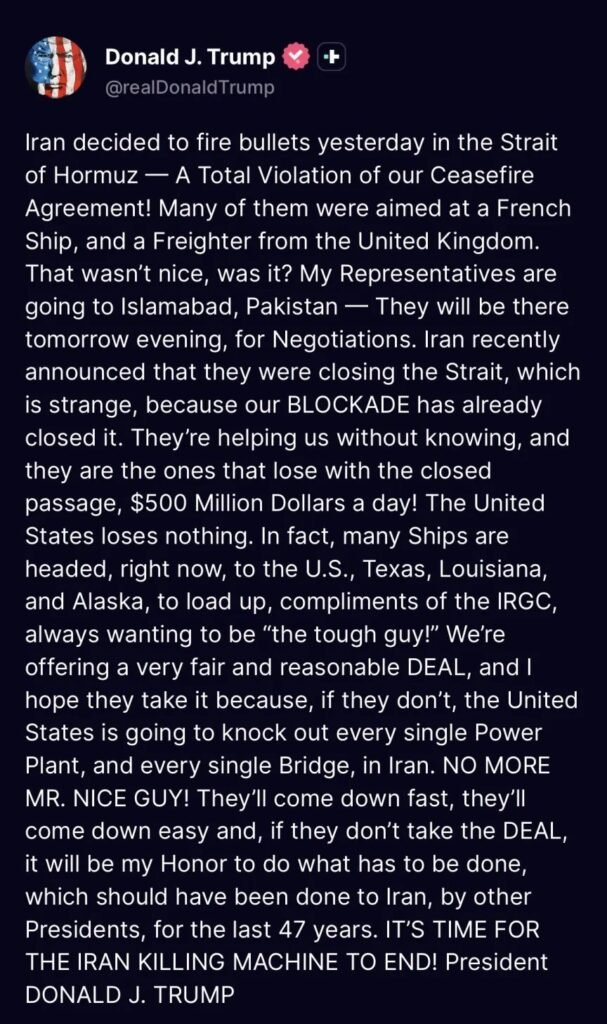
Dissecting Trump’s Latest Post
In the post, Trump reiterated that Iran has reopened the Strait of Hormuz but accused Tehran of continued “extortion” tactics. He specifically highlighted the potential targeting of power plants and bridges as part of a broader campaign to force complete compliance. The language echoes earlier warnings of “Power Plant Day and Bridge Day,” signaling that infrastructure strikes remain on the table if any disruptions resume.
Combined Impact on Iran: Naval Blockade + Infrastructure Threats
Iran is now facing a double squeeze. The active U.S. naval blockade already prevents most tankers from entering or exiting the strait, choking off the majority of the country’s oil export revenue. Adding the credible threat of strikes on power plants and bridges would compound the damage:
- Power Plants: Iran’s electricity grid is already strained. Targeted strikes could cause widespread blackouts, disrupting hospitals, water treatment, factories, and civilian life across major cities.
- Bridges: Destroying key bridges would severely hamper internal transportation of food, fuel, and goods, isolating regions and worsening supply shortages.
- Economic Toll: On top of the blockade’s immediate revenue loss (potentially billions of dollars per week), infrastructure damage could push Iran’s already fragile economy into deeper crisis, triggering hyperinflation, fuel shortages inside the country, and increased public unrest.
Together, the blockade and the threat of strikes create maximum leverage, making it extremely difficult for the Iranian regime to sustain prolonged resistance.
Multiple Ships Heading to U.S. Ports to Load American Oil
Trump also highlighted that numerous international tankers are now steaming toward U.S. ports to load American crude. This aligns with his repeated calls for countries to “buy oil from the United States” instead of relying on Middle Eastern supplies. The shift is already visible in shipping data, with several major buyers reportedly redirecting vessels to Gulf Coast and East Coast terminals.
Oil Market Implications — Current and Future Prices
The combination of the Hormuz reopening, the blockade’s pressure, and increased U.S. oil exports is expected to have a calming effect on global energy markets:
- Short-Term: Brent crude and WTI futures are likely to drop further as the immediate threat of a full strait closure fades. Analysts forecast a $5–12 per barrel decline in the coming days, easing some of the recent spikes.
- Jet Fuel and Gasoline: Lower crude prices should translate into relief at the pump and for airlines. Jet fuel costs, which have more than doubled in recent weeks, could fall 15–25% within two weeks, potentially allowing carriers to restore canceled flights and reduce surcharges.
- Longer-Term: Sustained U.S. export growth and a stable Hormuz could keep prices in a lower range ($70–90 per barrel for Brent) for the rest of 2026, assuming no new disruptions. This would support global economic growth and reduce inflationary pressure on consumers worldwide.
Why This Matters
Trump’s latest post reinforces the administration’s dual-track strategy: military pressure paired with economic incentives (buy American oil). For Iran, the combined blockade and infrastructure threats represent an existential economic challenge that could force faster concessions on the nuclear issue. For the global economy, the developments point toward lower and more stable energy prices, providing relief after weeks of volatility.
The situation remains fluid. While the Hormuz reopening is a major de-escalation, any Iranian retaliation or failure to maintain open shipping lanes could quickly reverse the positive momentum and trigger the threatened strikes. Markets will be watching closely for confirmation that tankers are moving freely and that U.S. oil exports continue to ramp up.
Sources (as of April 16, 2026):
- President Trump’s Truth Social posts (April 16, 2026)
- White House and Pentagon statements
- Shipping data from Bloomberg and Argus Media
- Oil market analysis from Reuters and S&P Global
Disclaimer: This article is a curated news roundup and analysis compiled by the Candid Brief News editorial team based on reporting from multiple established and trusted sources. Candid Brief News adds value through careful story selection, neutral summaries, contextual analysis, and occasional original commentary. We do not claim to have independent on-the-ground reporting for every story. Readers are encouraged to visit the original sources linked in each article for full details and the latest updates. All credit for original reporting belongs to the respective journalists and news organizations.