
Trump Signals Conditional Two-Week Ceasefire in Iran if Strait of Hormuz Reopens Immediately
Trump Signals Conditional Two-Week Ceasefire in Iran if Strait of Hormuz Reopens Immediately
President Responds to Pakistan Proposal with Offer to Pause Strikes Amid Escalating Rhetoric
By Candid Brief News | CandidBrief.com | April 8, 2026
President Donald J. Trump posted on Truth Social late Tuesday evening outlining a conditional two-week ceasefire framework with Iran. The post comes hours after his earlier threats of massive strikes on Iranian infrastructure and follows a diplomatic proposal from Pakistan to extend the deadline and allow time for negotiations.
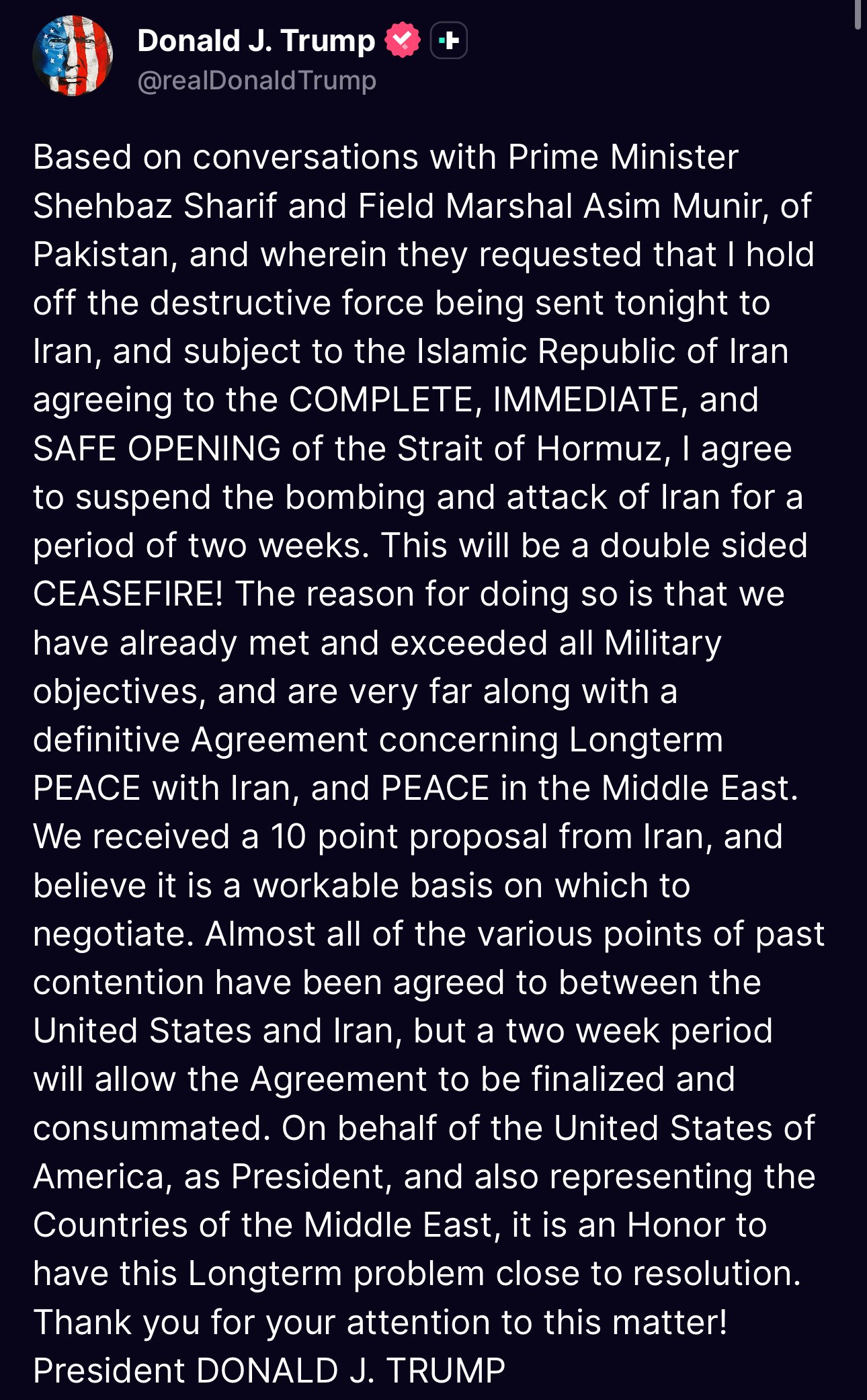
Dissecting Trump’s Truth Social Post
In the post, Trump addressed the ongoing crisis point by point:
- Conditional Two-Week Pause in Attacks: Trump indicated the U.S. would suspend military operations against Iran for two full weeks provided Tehran immediately and fully reopens the Strait of Hormuz to international shipping. This creates a “double-sided ceasefire” — Iran must act first on the waterway, after which the U.S. would hold fire.
- Link to Pakistan’s Proposal: The president explicitly referenced Pakistan’s suggestion to extend his original 8 p.m. ET deadline by two weeks “to allow diplomacy to run its course.” Trump signaled he is “aware” of the plan and open to it under the condition above.
- Immediate Requirement on Iran: The offer is not unilateral. Trump made clear that Iran must open the strait “right now” and without conditions as the first step. Only then would the two-week pause begin.
- Tone of Reluctance and Resolve: Consistent with earlier posts, Trump reiterated that he does not want escalation but warned that failure to comply would lead to severe consequences, echoing his previous statements that “a whole civilization will die tonight” if the strait remains closed.
The post represents a slight softening from Tuesday morning’s more aggressive rhetoric while maintaining maximum leverage.
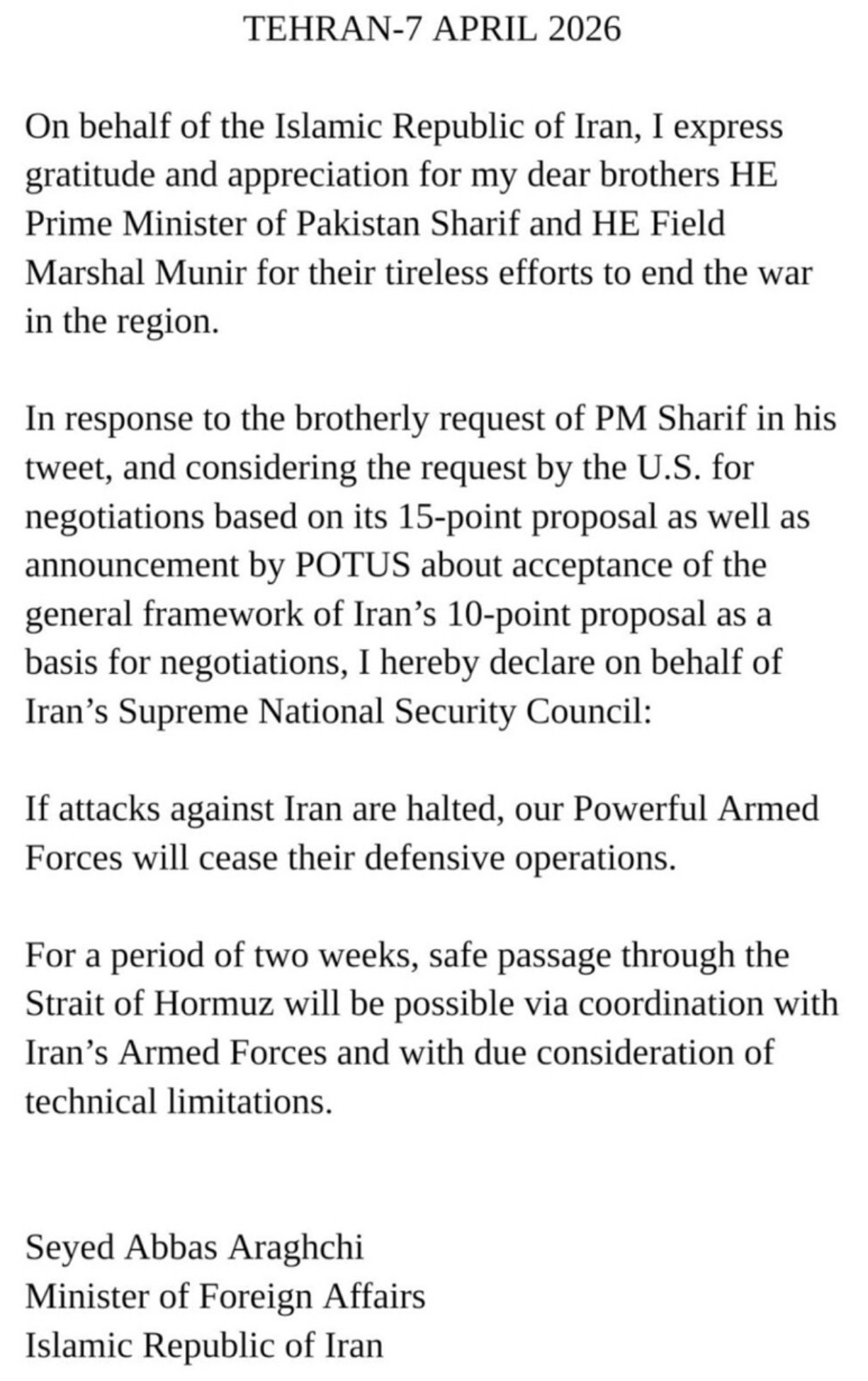
Will Oil Prices Come Down?
Markets are expected to react positively in the short term if Iran accepts the terms and begins reopening the strait. Brent crude and West Texas Intermediate futures have been highly volatile due to the blockade; a credible two-week ceasefire window could ease immediate supply fears and trigger a pullback of 5–10 % in the coming days. However, analysts caution that any hesitation from Tehran, renewed threats, or Israeli objections could keep prices elevated or even push them higher. Long-term relief depends on actual compliance and sustained diplomatic progress rather than just the announcement.
How Israel Is Likely to React
Israeli officials have not yet issued an official statement on Trump’s latest post, but the reaction is expected to be cautious at best. Israel has been a key partner in the campaign against Iran and has conducted its own strikes on Iranian targets. Prime Minister Benjamin Netanyahu and the Israeli security cabinet have repeatedly emphasized that any ceasefire must include ironclad guarantees on Iran’s nuclear program and missile capabilities, areas not explicitly addressed in Trump’s two-week proposal. Sources close to the Israeli government indicate Jerusalem may view the pause as premature and could push for continued pressure or even accelerate its own operations during the window to prevent Iran from regrouping. Coordination between Washington and Jerusalem will be critical in the coming hours.
Why This Matters
Trump’s conditional ceasefire offer marks a potential turning point in a conflict that has already driven oil prices higher, disrupted global shipping, and strained U.S. alliances. A successful two-week pause could open the door for broader negotiations, potentially stabilizing energy markets and giving diplomats breathing room to address the underlying nuclear and regional security issues. For the U.S., it aligns with the president’s stated goal of winding down major combat involvement while still achieving the key objective of reopening the Strait of Hormuz.
However, the proposal also carries significant risks. Iran has previously rejected temporary ceasefires, and its leadership may see the offer as a sign of weakness or an opportunity to extract further concessions. If Tehran rejects or delays compliance, the window could close quickly, leading to renewed escalation and even higher energy prices.
For Israel, the move highlights the challenge of balancing U.S. policy with its own existential security concerns. Any perception that Washington is de-escalating too quickly could strain the U.S.-Israel relationship and encourage Tehran to test the limits of the pause. On the global stage, the post underscores how fast-moving social media diplomacy now shapes real-world conflict outcomes, influencing markets, allies, and adversaries in real time.
The next 24–48 hours will be decisive. If Iran moves to reopen the strait, the two-week ceasefire could become reality and begin lowering the temperature in the region. If not, the president’s earlier threats may once again take center stage. Markets, diplomats, and military planners around the world are watching closely as the clock continues to tick.
Sources (as of April 8, 2026):
- President Trump’s Truth Social posts (April 7–8, 2026)
- Pakistani government statements and proposals
- Reporting from Reuters, BBC, NBC News, The Hill, and AP
- Oil market analysis from Bloomberg and Argus Media
- Israeli government and security sources via Axios and The Times of Israel
Disclaimer: This article is a curated news roundup and analysis compiled by the Candid Brief News editorial team based on reporting from multiple established and trusted sources. Candid Brief News adds value through careful story selection, neutral summaries, contextual analysis, and occasional original commentary. We do not claim to have independent on-the-ground reporting for every story. Readers are encouraged to visit the original sources linked in each article for full details and the latest updates. All credit for original reporting belongs to the respective journalists and news organizations.