
Trump Orders Immediate Naval Blockade of Strait of Hormuz, Vows to Destroy Mines and Interdict Toll-Paying Ships
By Candid Brief News | CandidBrief.com | April 12, 202
President Donald J. Trump announced today that the United States Navy will immediately begin a naval blockade of the Strait of Hormuz. In a series of strongly worded Truth Social posts, Trump described Iran’s refusal to fully open the critical waterway as “world extortion” and stated the U.S. will take aggressive action to restore free passage.
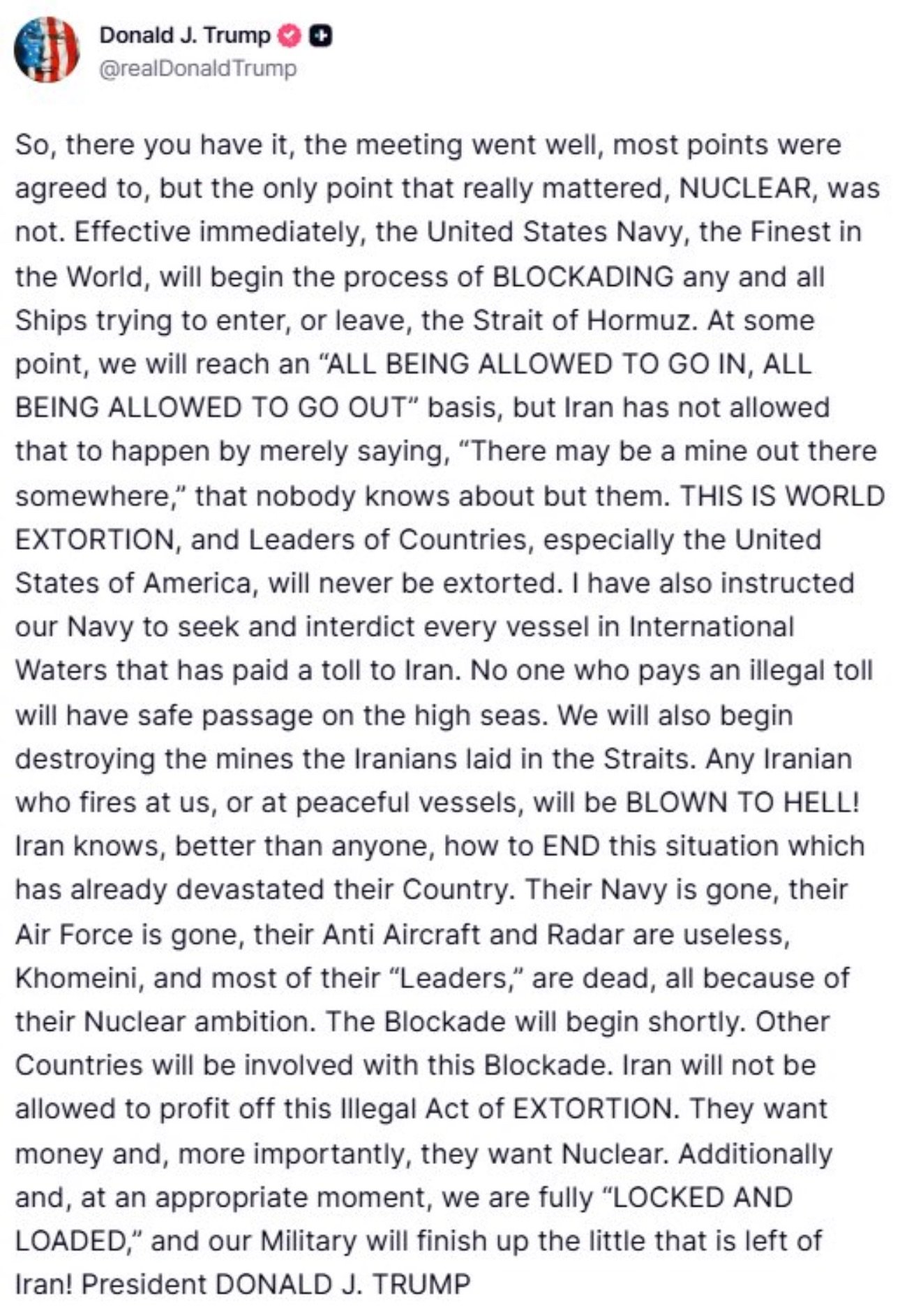
Dissecting Trump’s Posts
Trump stated that the marathon negotiations in Islamabad (which lasted nearly 20 hours) went well on most points, but the only issue that truly mattered, Iran’s nuclear program, was not resolved. He accused Iran of failing to honor its promise to reopen the Strait of Hormuz, citing their claim of possible mines as an excuse.
Key announcements include:
- The U.S. Navy will immediately begin blockading any ships attempting to enter or leave the Strait of Hormuz.
- U.S. forces will seek out and interdict vessels in international waters that have paid an “illegal toll” to Iran.
- The Navy will begin destroying Iranian mines laid in the strait.
- Any Iranian vessel or force that fires on U.S. or peaceful shipping will be “blown to hell.”
- The president described the situation as “locked and loaded,” signaling full military readiness.
Trump praised the mediation efforts of Pakistan’s leadership but made clear the U.S. will no longer tolerate what he called Iranian extortion.
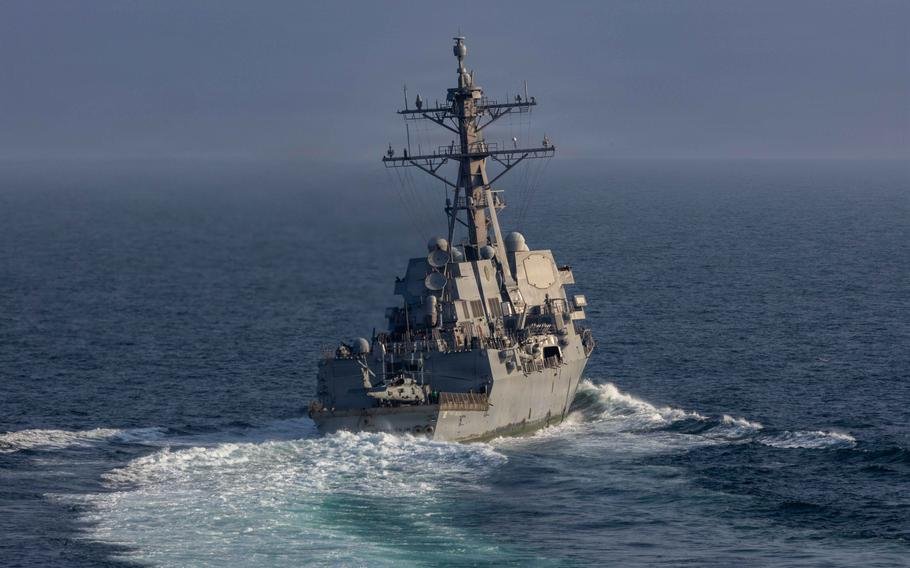
Potential Hazards to U.S. Navy Ships
The blockade carries real risks. Iran has previously laid naval mines in the strait and possesses anti-ship missiles, fast-attack boats, and drones. Trump acknowledged the danger by referencing Iran’s claim of “a mine out there somewhere” but stated the U.S. will proceed regardless and actively hunt for and destroy those mines.
Impact on Gas Prices
A full or partial blockade of the Strait of Hormuz, through which roughly 20% of global oil and significant LNG passes, would have immediate and severe consequences for energy markets. Even a short-term disruption could push Brent crude prices well above $120 per barrel, with analysts warning of daily spikes of 8–15%. Gasoline prices in the U.S. could rise 30–60 cents per gallon within days, adding renewed inflationary pressure on consumers and businesses already strained by earlier conflict-related volatility. Prolonged closure would ripple through global supply chains, affecting everything from airline tickets to heating costs.
Why Iran Is Not Conceding on Nuclear Material
Iran has repeatedly stated that its nuclear program is a matter of national sovereignty and deterrence. Tehran views complete capitulation on enrichment and stockpiles as an existential threat to the regime’s survival. Despite heavy military pressure and economic sanctions, Iranian leaders have shown no willingness to dismantle their nuclear infrastructure, believing it provides long-term leverage against perceived U.S. and Israeli hostility. The posts make clear this remains the single non-negotiable issue preventing any broader deal.
Risk of Further U.S. Military Involvement
Trump’s language: “locked and loaded” and threats to “finish up the little that is left of Iran” signals the administration is prepared for escalation. If Iran responds aggressively to the blockade (with mines, missiles, or proxy attacks), the U.S. could quickly find itself drawn into a new round of direct strikes on Iranian naval assets, coastal defenses, or even inland targets. This could expand into a broader military excursion involving sustained air and naval operations, increased troop commitments in the Gulf, and higher risk of regional spillover involving Hezbollah, the Houthis, or other proxies.
Why This Matters
Trump’s announcement marks a sharp escalation from diplomacy to direct enforcement. By imposing a naval blockade and actively targeting Iranian mines and toll-paying vessels, the U.S. is asserting control over one of the world’s most vital energy arteries. While this could force Iran to reopen the strait faster, it also raises the immediate danger of miscalculation and accidental confrontation at sea.
For global markets, the move adds fresh uncertainty at a time when oil supply is already fragile. Higher energy prices would hit consumers and businesses worldwide, potentially slowing economic growth. For the U.S., it carries both strategic opportunity (restoring freedom of navigation) and risk (higher costs, potential casualties, and longer-term entanglement).
The coming hours and days will be decisive. Iran’s response, whether restraint or retaliation, will determine whether this blockade leads to a quick resolution or drags the region into another dangerous phase of conflict.
Sources (as of April 12, 2026):
- President Trump’s Truth Social posts (April 12, 2026)
- White House and Pentagon statements
- Reporting from Reuters, Bloomberg, Fox News, and Al Jazeera
Disclaimer: This article is a curated news roundup and analysis compiled by the Candid Brief News editorial team based on reporting from multiple established and trusted sources. Candid Brief News adds value through careful story selection, neutral summaries, contextual analysis, and occasional original commentary. We do not claim to have independent on-the-ground reporting for every story. Readers are encouraged to visit the original sources linked in each article for full details and the latest updates. All credit for original reporting belongs to the respective journalists and news organizations.