
Behind the Headlines: Why U.S. RC-135 Rivet Joint Spy Flights Near Cuba Are Getting Attention
By Candid Brief News | CandidBrief.com | Feb 12 , 2026
In early February 2026, open flight-tracking data showed a U.S. Air Force RC-135V “Rivet Joint” intelligence aircraft flying repeated patterns just north of Cuba’s coastline, sparking renewed interest in what appears to be heightened U.S. aerial surveillance over the island’s maritime approaches and nearby international airspace.
What’s Going On?
The RC-135V/W Rivet Joint is a highly specialized signals-intelligence (SIGINT) aircraft designed to intercept, analyze, and geolocate communications, radar emissions, and other electronic signals from military, naval, and airborne systems. It operates in international airspace where it can collect data without violating sovereign borders.
Recent flights tracked near Cuba focused on the northern coastal airspace over international waters, where the aircraft’s sensor suite is well positioned to gather electronic activity from Cuban military communications, radar networks, and any nearby foreign deployments. Observers say such missions help build a detailed picture of regional air-defense capabilities, command-and-control links, and potential partnerships with outside actors, including Russia or China, without entering Cuba’s airspace.
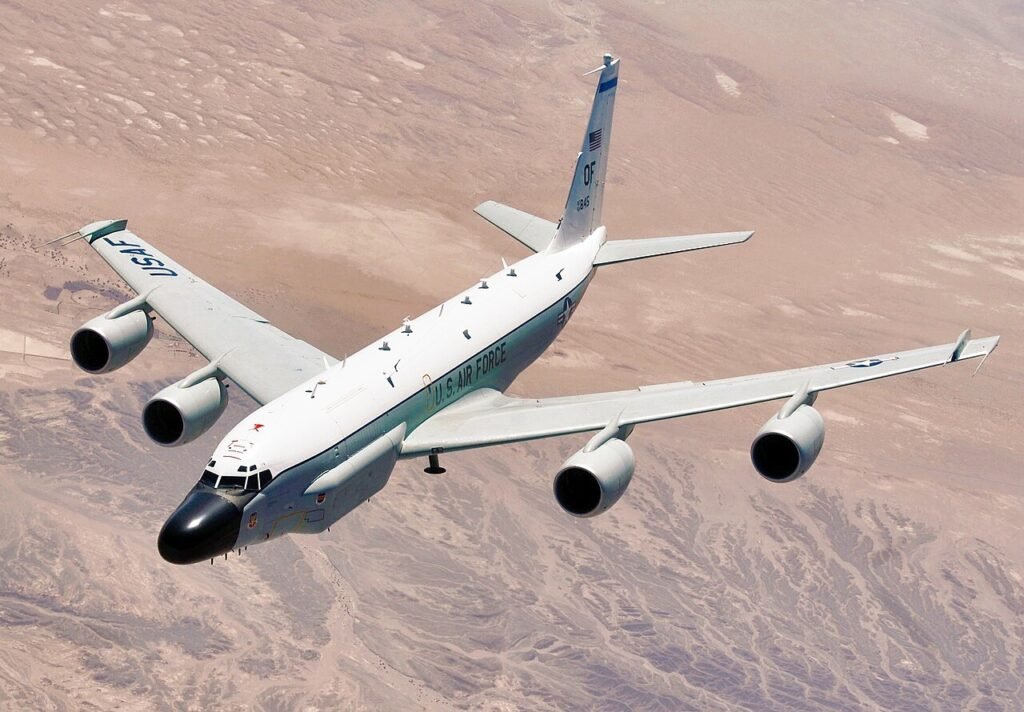
How the U.S. Used the RC-135 in the Venezuela Crisis
This pattern of persistent intelligence flights isn’t new: in January 2026, an RC-135W was tracked flying extended SIGINT missions near Venezuela’s coast amid heightened U.S. military pressure and operations associated with a broader Caribbean security campaign.
During the Venezuela scenario, these flights were conducting electronic surveillance over international airspace, collecting emissions tied to radar systems, military communications, and air-defense networks. The data went to U.S. command centers, giving planners near real-time insights into the opponent’s capabilities, posture, and response triggers, a key advantage in managing deterrence or crisis escalation.
Experts note that Rivet Joint aircraft have been part of virtually every major U.S. military operation since the Vietnam War because their intelligence helps commanders understand an adversary before moving forces or shaping strategy.
Is the U.S. “Preparing to Do the Same Thing to Cuba”?
In simple terms: increased Rivet Joint surveillance missions could be consistent with contingency planning, but they do not, by themselves, indicate imminent military action against Cuba.
Here’s what analysts see happening now:
1. Enhanced Situational Awareness
Flying RC-135 missions builds an up-to-date map of Cuban military electronic activity, the “electronic order of battle”, which helps U.S. defense planners monitor changes, test Cuban systems’ alert responses, and prepare for a range of scenarios if regional tensions rise.
2. Regional Monitoring Within a Broader Security Campaign
The Caribbean itself has been the focus of an ongoing U.S. military posture buildup, including air and naval assets, connected to operations like Operation Southern Spear, a campaign aimed at mounting security pressure around issues tied to Venezuela and organized crime threats.
3. Signaling and Early Warning, Not Immediate Conflict
RC-135 flights around hotspots like Cuba are often part of routine ISR (intelligence, surveillance, reconnaissance) activity that also sends a signal of heightened attention. That is, these missions show Washington is watching closely, but they remain outside sovereign airspace and focused on intelligence gathering, not direct strikes or overt military confrontation.
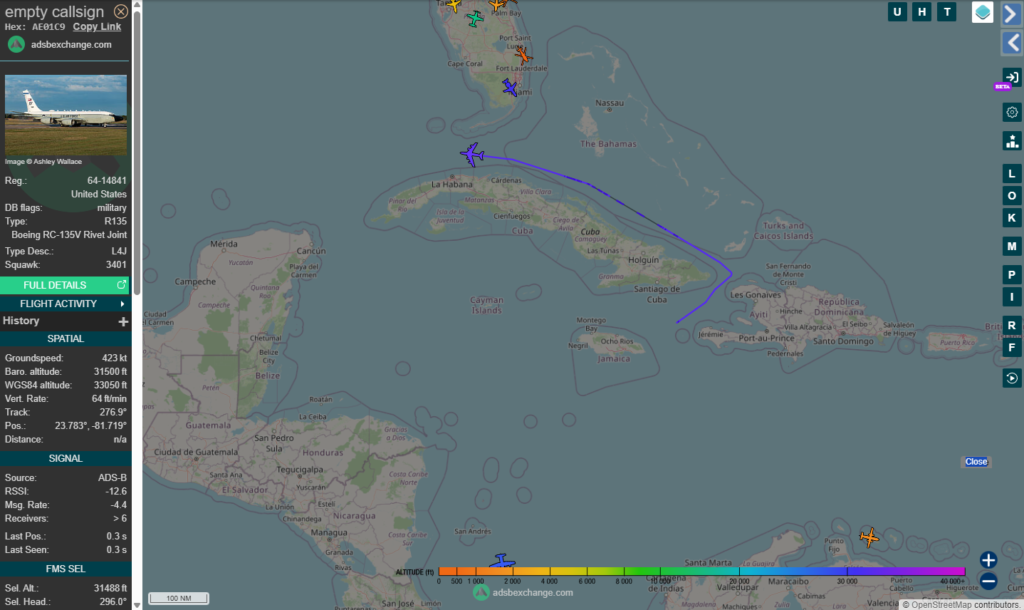
What to Watch Next
While these flights don’t announce any specific military timeline, they do highlight a few broader trends:
Continued tracking of RC-135 and other U.S. ISR missions near Cuba and throughout the Caribbean. Patterns in Cuban air defense radio traffic or radar activity that could hint at changes in posture. Additional assets spotted nearby, such as Navy drones (e.g., MQ-4C Triton) or maritime surveillance aircraft, which would indicate more integrated operations.
These layers of intelligence activities, taken together, show Washington is gathering detailed baseline and dynamic data, data that’s crucial if any future diplomacy, deterrence, or contingency planning in the region requires a rapid, informed response.
Disclosure: This article is based on publicly available information and coverage by other news outlets, independently summarized and rewritten by CandidBrief.
Related coverage on regional security developments is available on CandidBrief.com