
Trump Strongly Considering U.S. Exit from NATO After Allies Withhold Support in Iran Operation
By Candid Brief News | CandidBrief.com | April 9, 2026
President Donald J. Trump has reignited debate over America’s role in NATO, stating he is “strongly considering” withdrawing the United States from the 77-year-old military alliance. The comments come after most NATO members declined to provide military support during the recent U.S.-led operation against Iran.
Recent Trump Posts and Statements
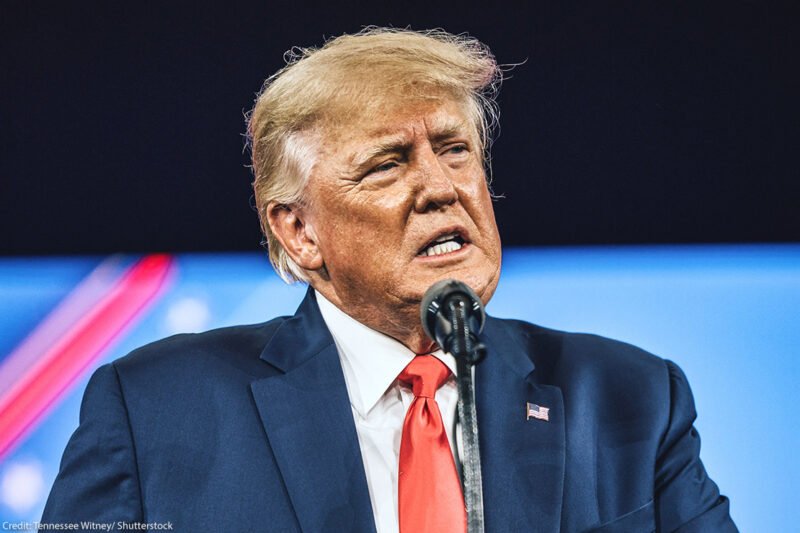
In a series of Truth Social posts and an interview with The Telegraph, Trump sharply criticized NATO allies for refusing to join U.S. military actions against Iran. He wrote that “most of our NATO ‘Allies’… don’t want to get involved with our Military Operation against the Terrorist Regime of Iran,” despite their earlier agreement that Iran must not be allowed to develop nuclear weapons. Trump described NATO as a “one-way street,” noting that the U.S. spends “hundreds of billions of dollars per year protecting these same countries” while receiving little reciprocal support “in a time of need.”
In the Telegraph interview published April 1, 2026, Trump explicitly said he is “strongly considering pulling the United States out of NATO” because the alliance failed to back the U.S. during the Iran conflict.
History of NATO
The North Atlantic Treaty Organization was founded on April 4, 1949, in the early years of the Cold War. Twelve original member nations signed the treaty in Washington, D.C., primarily to deter Soviet expansion in Europe. The alliance’s cornerstone is Article 5, which states that an armed attack against one member is considered an attack against all. NATO invoked Article 5 for the first (and only) time after the September 11, 2001, terrorist attacks on the United States.
Function and Importance of NATO
NATO serves as the world’s most powerful collective-defense pact. Its 32 current members (including recent additions Finland and Sweden) share military resources, conduct joint exercises, and coordinate intelligence. The alliance has been credited with maintaining peace in Europe for more than seven decades, deterring major conflicts during the Cold War, and leading operations in the Balkans, Afghanistan, and against ISIS. For the United States, NATO provides forward-deployed bases, burden-sharing among allies, and a unified front against adversaries such as Russia and China.
NATO’s Response to the Iran Operation
During the recent U.S.-Iran conflict, the alliance did not provide direct military support. While some members expressed diplomatic agreement that Iran must not acquire nuclear weapons, no NATO country committed troops, aircraft, or naval assets to the operation. Trump has repeatedly highlighted this lack of support as evidence that the alliance no longer serves U.S. interests.
Consequences If the U.S. Leaves NATO
A U.S. withdrawal would be historic and potentially destabilizing. It could:
- Weaken NATO’s overall deterrent power, emboldening adversaries like Russia.
- Force European nations to rapidly increase defense spending or form new security arrangements.
- Raise U.S. defense costs, as America would lose shared bases and intelligence networks in Europe.
- Damage transatlantic relations and America’s global credibility.
- Create uncertainty in global markets and security alliances worldwide.
Legal experts note that while the president can begin the process, full withdrawal would likely require Congressional approval under current U.S. law.
Why This Matters
Trump’s latest comments represent one of the most direct challenges to NATO in its history and come at a pivotal moment. The alliance has long been viewed as the cornerstone of post-World War II Western security. If the U.S., which provides roughly two-thirds of NATO’s total military capability were to leave, the organization could face an existential crisis. European leaders have already begun emergency consultations, with some warning that a U.S. exit would be “catastrophic” for collective defense.
For the United States, the move could deliver short-term savings but risks long-term isolation. Allies that have relied on American protection for generations would be forced to rethink their own defense strategies, potentially leading to a more fragmented and unpredictable world order.
The Iran operation has become a flashpoint: Trump’s frustration with NATO’s non-participation has crystallized his long-standing view that the alliance is outdated and unfair to American taxpayers. Whether this is negotiating leverage or a genuine policy shift remains to be seen, but the rhetoric alone has already rattled markets and allies.
The coming weeks will be critical. Any formal steps toward withdrawal would mark the end of an era in U.S. foreign policy and could reshape global security for decades.
Sources (as of April 9, 2026):
- President Trump’s Truth Social posts and The Telegraph interview (April 1, 2026)
- Reuters, BBC, The New York Times, and The Hill reporting
- NATO official history and treaty documents
Disclaimer: This article is a curated news roundup and analysis compiled by the Candid Brief News editorial team based on reporting from multiple established and trusted sources. Candid Brief News adds value through careful story selection, neutral summaries, contextual analysis, and occasional original commentary. We do not claim to have independent on-the-ground reporting for every story. Readers are encouraged to visit the original sources linked in each article for full details and the latest updates. All credit for original reporting belongs to the respective journalists and news organizations.