
CIA Deploys Never-Before-Used “Ghost Murmur” Tool to Rescue Downed U.S. Airman in Iran by Detecting His Heartbeat
By Candid Brief News | CandidBrief.com | April 8, 2026
The CIA has revealed it used a highly classified new tool called “Ghost Murmur” to locate and rescue the second American airman shot down over Iran, not by tracking his phone, radio, or any conventional beacon, but by detecting the electromagnetic pulse of his beating heart from dozens of miles away.
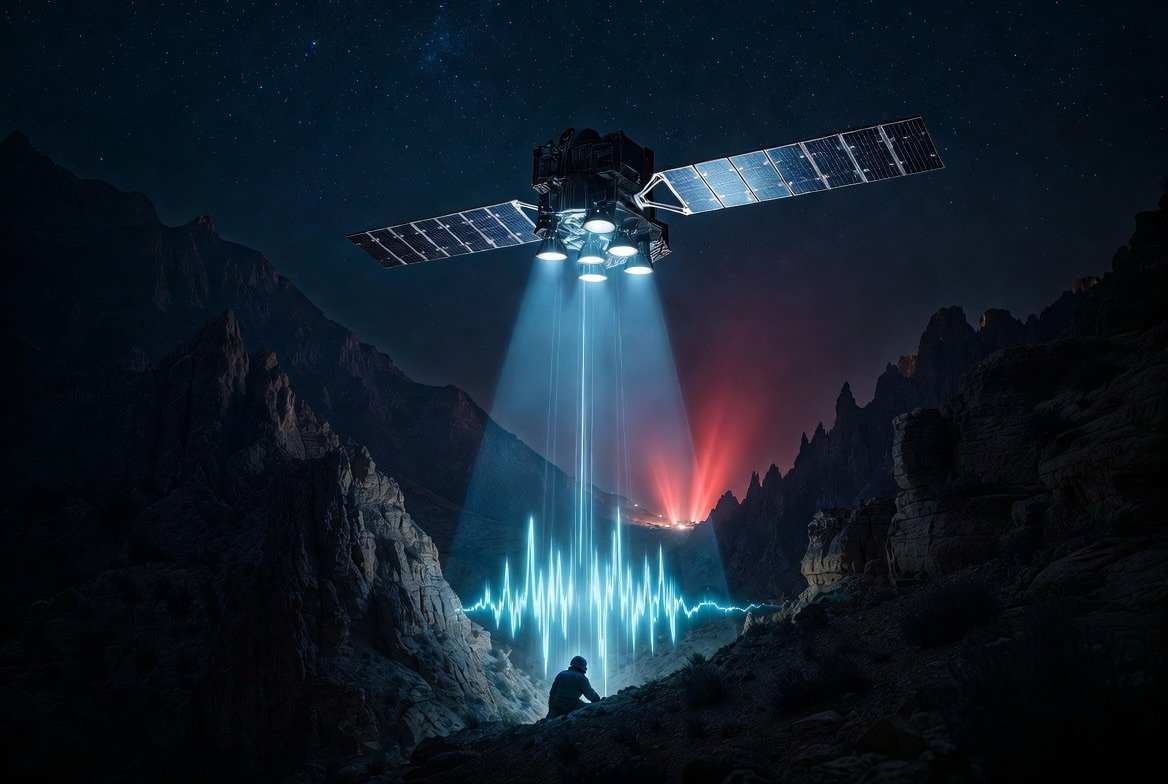
Background: The Pilot and the Mission
The airman, known by the callsign “Dude 44 Bravo” (the weapons systems officer of the downed F-15E Strike Eagle), had been wounded and alone for nearly two days. He was hiding in a narrow mountain crevice while Iranian forces conducted an intense ground search. Traditional rescue methods, including emergency beacons and radio signals, were either unavailable or too risky to use without giving away his position.
How “Ghost Murmur” Worked
Developed in total secrecy by Lockheed Martin’s legendary Skunk Works division, the same team responsible for the SR-71 Blackbird, the U-2 spy plane, the stealth bomber, and virtually every classified U.S. aircraft program, Ghost Murmur uses advanced quantum magnetometry to detect the faint electromagnetic field generated by a human heartbeat. Artificial intelligence then filters out all background noise (wind, animals, vehicles, electronic interference) to isolate the unique cardiac signature.
Sources say the system successfully identified the pilot from more than 40 miles away under the right conditions. Once his location was pinpointed, U.S. special operations forces moved in and extracted him in a high-risk operation.
First Operational Use
This was Ghost Murmur’s very first real-world deployment. Until now, the technology had remained locked in classified testing. Its sudden public reveal, through leaks and official confirmation, signals that the U.S. intelligence community deemed the rescue important enough to declassify the tool’s existence.

Why This Matters
The successful use of Ghost Murmur rewrites assumptions about surveillance, privacy, and American technological power. For decades, the public has grown accustomed to tracking via phones, GPS, credit cards, and social media. This tool bypasses all of that. It does not need any device or signal from the target, only a living, beating heart.
In the hands of the CIA or military, this capability could transform search-and-rescue missions and special operations. But it also raises profound long-term questions about future applications. If the technology can be mounted on aircraft, drones, or even satellites, it could theoretically locate individuals in urban environments, dense forests, underground facilities, or crowded cities, anywhere a heart is beating.
Privacy advocates warn that tools like Ghost Murmur represent a new frontier in surveillance: one that does not rely on the target’s voluntary use of technology. While this instance saved an American pilot’s life, the precedent is now set. The next time this system is used, it may not be for a rescue. It could be used against adversaries, terrorists, or even in domestic law-enforcement scenarios if the technology proliferates.
The fact that Skunk Works, America’s most secretive aerospace division, built it underscores how deeply embedded these capabilities already are in U.S. defense programs. The public is only learning about it now because the mission was deemed worthy of disclosure. That selective transparency itself is a reminder of how much advanced technology remains hidden until the government chooses to reveal it.
In an era of great-power competition and rapid technological leaps, Ghost Murmur is more than a rescue tool. It is a stark illustration of how far remote-sensing capabilities have advanced, and how the balance between security and individual privacy continues to shift in ways most people have never imagined.
Sources (as of April 8, 2026):
- The New York Post (exclusive reporting on Ghost Murmur)
- Lockheed Martin Skunk Works background and historical programs
- U.S. Central Command and Pentagon statements on the F-15E rescue
- Reporting from India Today, NDTV, Fox News, and The Aviationist
Disclaimer: This article is a curated news roundup and analysis compiled by the Candid Brief News editorial team based on reporting from multiple established and trusted sources. Candid Brief News adds value through careful story selection, neutral summaries, contextual analysis, and occasional original commentary. We do not claim to have independent on-the-ground reporting for every story. Readers are encouraged to visit the original sources linked in each article for full details and the latest updates. All credit for original reporting belongs to the respective journalists and news organizations.